
Guide
How to fix gritty, recrystallized erythritol in baked goods
If a keto or sugar-free bake comes out of the oven fine and then turns sandy, gritty, or crunchy as it cools, that's erythritol recrystallizing, not a broken recipe. The fix is a corrected ratio, not more troubleshooting. Here's what the database actually supports, and what's common baking practice you can't source.
Database v0.0.1 (draft) — updated 2026-07-21
In the repair
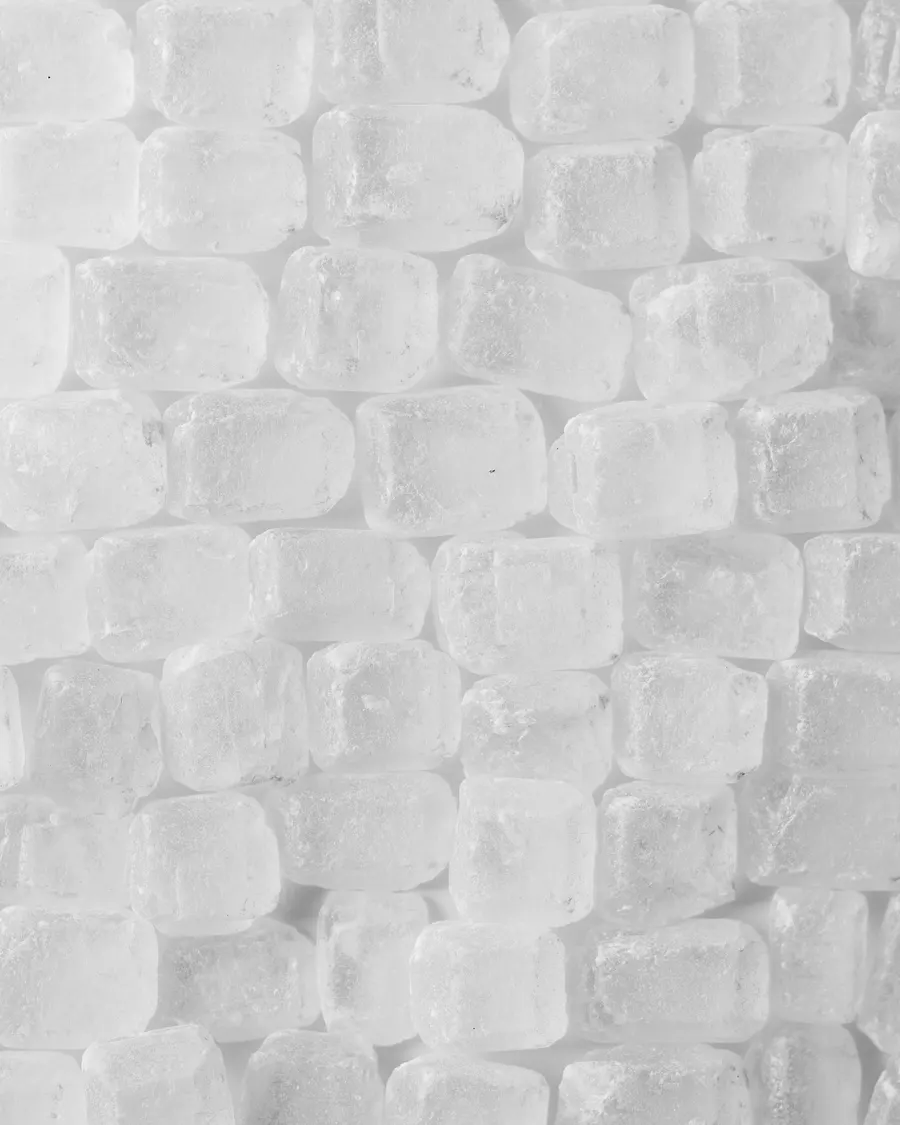
The fix, up front: cut the erythritol load
Three directions are on the table, and the database supports them unevenly. Best-supported: replace part of the erythritol with a sweetener that doesn't recrystallize. Allulose is the database's only non-recrystallizing option, at the cost of faster browning you'll need to manage. Also supported, more loosely: reduce the total erythritol in the recipe, since Database v0.1 frames the graininess as tied to concentration and cooling rather than an unavoidable property of any amount of erythritol used. Weakest support: switching from granular to powdered erythritol. It's plausible and commonly recommended by bakers, but the database's erythritol record is explicitly scoped to granular use, so this guide can't cite a number for it. If you want the ratio math done against your exact recipe rather than worked out by hand, paste it into the tool.
Source: Database v0.1 sweetener entries "erythritol" and "allulose," fields substitution_ratio_vs_sugar, cooling_effect, and moisture_behavior.Corrected ratio: erythritol-to-allulose partial swap
Erythritol swaps close to 1:1 by volume against sugar. Allulose needs more, about 1⅓ cups per cup of sugar it replaces, because it's roughly 70% as sweet by weight. Building a partial swap means keeping the erythritol portion at its own ratio and sizing the allulose portion at its own, larger ratio, not treating them interchangeably.
| Sugar this recipe calls for | Erythritol portion (1:1 by volume) | Allulose portion (1:1.33 by volume) | Trade-off |
|---|---|---|---|
| 1 cup, 100% erythritol (baseline — what usually goes gritty) | 1 cup | — | No browning; full recrystallization risk on cooling |
| 1 cup, ⅔ erythritol / ⅓ allulose by original sugar volume | ⅔ cup | ~⅓ cup × 1.33 ≈ 0.44 cup | Reduced grittiness; some added browning to watch for |
| 1 cup, ½ erythritol / ½ allulose by original sugar volume | ½ cup | ½ cup × 1.33 ≈ 0.67 cup | Larger grittiness reduction; browns noticeably faster than sugar, lower oven temp or shorter bake needed |
The database doesn't specify an optimal fraction for minimizing graininess specifically. The ⅔/⅓ and ½/½ splits above are reasonable starting points built from each sweetener's own sourced ratio, not a tested "this fraction eliminates grit" figure. Expect to adjust by taste and texture on a second bake.
Source: Database v0.1 substitution_ratio_vs_sugar fields for erythritol (1:1, manufacturer/common baking guidance) and allulose (1:1.33, Now Foods manufacturer guidance / common allulose-brand baking guides).Why it's gritty once it cools, not while it's warm
Erythritol dissolves into the batter's moisture while the bake is hot. Database v0.1's moisture_behavior field for erythritol documents that it "recrystallizes/becomes grainy on cooling in some baked goods," a documented common complaint, not an edge case. As the bake cools, the erythritol comes back out of solution as small crystals, which is what registers as sandy or crunchy on the tongue. This is why a bake can taste and feel fine straight out of the oven and turn gritty twenty minutes later on the counter: the texture change is a cooling-phase event, not a baking-phase one. The database doesn't give an exact temperature or time threshold for when recrystallization starts, only that it's tied to cooling and concentration.
Source: Database v0.1 sweetener entry "erythritol," fields moisture_behavior and cooling_effect.Erythritol won't caramelize — so don't chase a crisp crust from it
Database v0.1 marks erythritol's browning field as no: it doesn't caramelize the way sugar does. If part of what's bothering you about a gritty bake is also a pale, flat top or a crust that never got that deep caramelized color, that's a separate but related issue. No amount of ratio-tuning on the erythritol side will fix it, because the chemistry that produces caramelization simply isn't present in erythritol. That's a job for a sweetener that does brown. Allulose's own record marks browning as yes: it participates directly in Maillard browning and can brown faster and darker than sugar at the same oven temperature, which is the trade-off behind the ratio table above.
Source: Database v0.1 sweetener entries "erythritol" (browning: no) and "allulose" (browning: yes).What does NOT fix it
- Baking longer or hotter. The graininess is a cooling-phase event, not an underbaking symptom. Extra oven time doesn't touch recrystallization and risks drying out or over-browning the rest of the bake.
- Adding more liquid. Extra liquid addresses erythritol's separate documented dryness issue (see the gummy brownies guide for that failure mode), not the crystal structure that forms on cooling. The database doesn't link moisture content to recrystallization specifically.
- Switching sweetener brands within erythritol. Recrystallization is documented as a property of erythritol itself, not a specific manufacturer's formulation, so swapping brands of granular erythritol is unlikely to change the outcome on its own.
- Eating it warm and calling it fixed. That masks the symptom rather than resolving it. The crystals still form once the bake cools to serving temperature.
-
1. Blend in allulose for the portion you can afford to brown faster.
Use the ratio table above. Start with a ⅔/⅓ erythritol-to-allulose split by original sugar volume if this is your first attempt, and drop the oven temperature slightly or check earlier for doneness since allulose browns faster.
Source: Database v0.1 substitution_ratio_vs_sugar (erythritol, allulose). -
2. If you can't use allulose, reduce total erythritol rather than substituting it all.
Cut the erythritol back and accept slightly less sweetness, or supplement sweetness with a non-bulk sweetener like stevia, rather than pushing more erythritol volume into the batter. Database v0.1 frames the grittiness as concentration-related.
Source: Database v0.1 sweetener entry "erythritol," field moisture_behavior. -
3. Try powdered erythritol where the recipe allows it.
This is common baking practice, not a database-sourced figure; the erythritol entry's serving_assumption is scoped to granular, cup-for-cup use. Treat powdered form as a secondary lever to test, not a guaranteed fix.
Source: Database v0.1 sweetener entry "erythritol," field serving_assumption (no powdered-form data). -
4. Don't expect caramelization from erythritol at any ratio.
If a browned, caramelized result matters to you, lean the blend further toward allulose rather than adjusting technique around erythritol. Erythritol's browning behavior is documented as no regardless of ratio or method.
Source: Database v0.1 sweetener entries "erythritol" and "allulose," field browning.
Don't want to work out the erythritol-to-allulose split by hand? Paste your recipe and RecipeMend calculates the corrected ratios for your exact quantities, with sources.
Paste your recipe into the toolFAQ
Is this the same problem as gummy or dense sugar-free brownies?
No, it's a different failure mode within the same sweetener family. Gumminess and density point to a bulk-versus-sweetness swap error or underbaking; see the gummy brownies guide for that. Grittiness is specifically erythritol's own cooling-phase recrystallization, documented separately in the database's moisture_behavior field.
Does this happen with all erythritol-sweetened bakes, or just some?
Database v0.1 describes it as "documented in some baked goods," not universal. It's a common complaint, not a guaranteed outcome in every recipe. The database doesn't break down which specific bake types are most at risk.
Can I use 100% allulose instead of erythritol to avoid the issue entirely?
Allulose's record shows no cooling effect, so a full swap would sidestep recrystallization, but it also browns faster and darker than sugar (browning: yes), so a full swap trades one texture problem for a browning-management one. The database doesn't rule this out, but it does mean adjusting your oven temperature and bake time rather than a drop-in replacement.
Why does erythritol turn gritty or sandy after baking?
Erythritol recrystallizes as it cools. It dissolves in the batter's moisture while warm, then as the bake cools the sugar alcohol comes back out of solution as tiny crystals, which reads as a gritty, sandy, or crunchy texture. Database v0.1 documents this as a common complaint tied to erythritol's moisture behavior; it does not caramelize like sugar, which is a related but separate issue. The concentration of erythritol and how much the bake cools appear to be the relevant factors, though the database doesn't give an exact threshold.
Does swapping some erythritol for allulose fix the graininess?
It's the strongest DB-supported direction. Allulose's own record shows no cooling effect and no recrystallization, unlike erythritol. The trade-off, also sourced in the database, is that allulose participates directly in Maillard browning and browns faster/darker than sugar, so a partial swap needs a lower oven temperature or shorter bake to avoid over-browning. A full swap isn't necessary; a partial replacement (roughly a third to half of the erythritol) is the common starting point, though the database doesn't specify an exact optimal fraction for graininess reduction specifically.
Will using powdered erythritol instead of granular fix the crunch?
Database v0.1's erythritol entry is scoped to granular, cup-for-cup baking use; its ratio and behavior notes were not measured against a powdered form. Powdered erythritol is ground finer and often blended with a starch, and bakers commonly report smaller, less noticeable crystals with it, but that's common baking practice rather than a sourced database claim. Treat it as a plausible secondary lever, not a proven fix.
Why is my bake crunchy on the edges but not caramelized like a sugar version?
Because erythritol doesn't caramelize; Database v0.1 marks its browning behavior as no. If you're chasing a caramelized crust or a crisp browned top, erythritol's own chemistry can't deliver it regardless of how the ratios are adjusted. That result requires a sweetener that browns, like allulose, or a different approach to the crust entirely.
Want this same rigor applied to your own recipe?
€19 one-time
Paste your recipe and get every ingredient's swap, ratio, and source, including a corrected erythritol/allulose split, in one printable report.
Repair your own recipeNoted — taking you to the tool.